
The spreadsheet that became a system
Turn shared files, manual checks and version confusion into structured records, permissions and a workflow your team can follow.
BESPOKE SOFTWARE DEVELOPMENT
When spreadsheets, workarounds and disconnected tools start running the business, it’s time for a system designed around your operations.
Free initial conversation. No obligation.
01START WITH THE BOTTLENECK
You don’t need to replace everything at once. Start with the process where a purpose-built system can make a meaningful difference.
Turn shared files, manual checks and version confusion into structured records, permissions and a workflow your team can follow.
Connect enquiries, orders, approvals and delivery so the next person has the context they need to act.
Let customers view information, share documents and track requests through a secure, purpose-built self-service experience.
Connect useful existing software through APIs and controlled data flows, with clear handling for exceptions and failures.
Keep what already works. Sometimes the right answer is an integration or a focused internal tool. We’ll discuss where custom development adds value before expanding the scope.
02CONNECTED SYSTEMS, IN PRACTICE
Examples of delivered software that brings business data and workflows into a usable product.
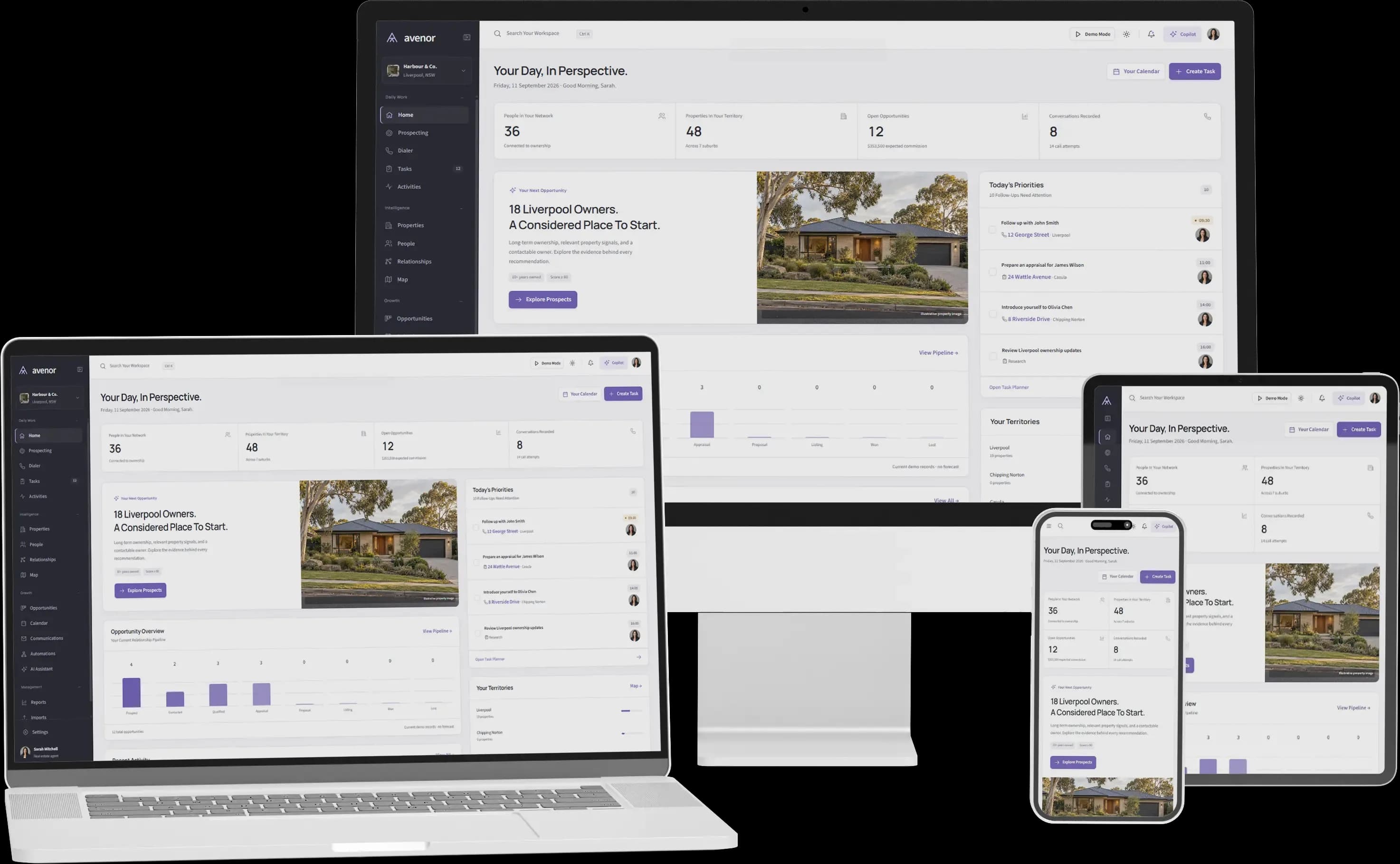 ACTUAL PROJECT · CUSTOM CRM / PROPERTY INTELLIGENCE
PROPERTY INTELLIGENCE & CRM
Avenor brings property intelligence and contact relationships into a platform for prospecting, with map views, a power dialer and automation.
The relevant principle: organise the information around the job your team needs to do with it.
View Avenor case study (opens in a new tab)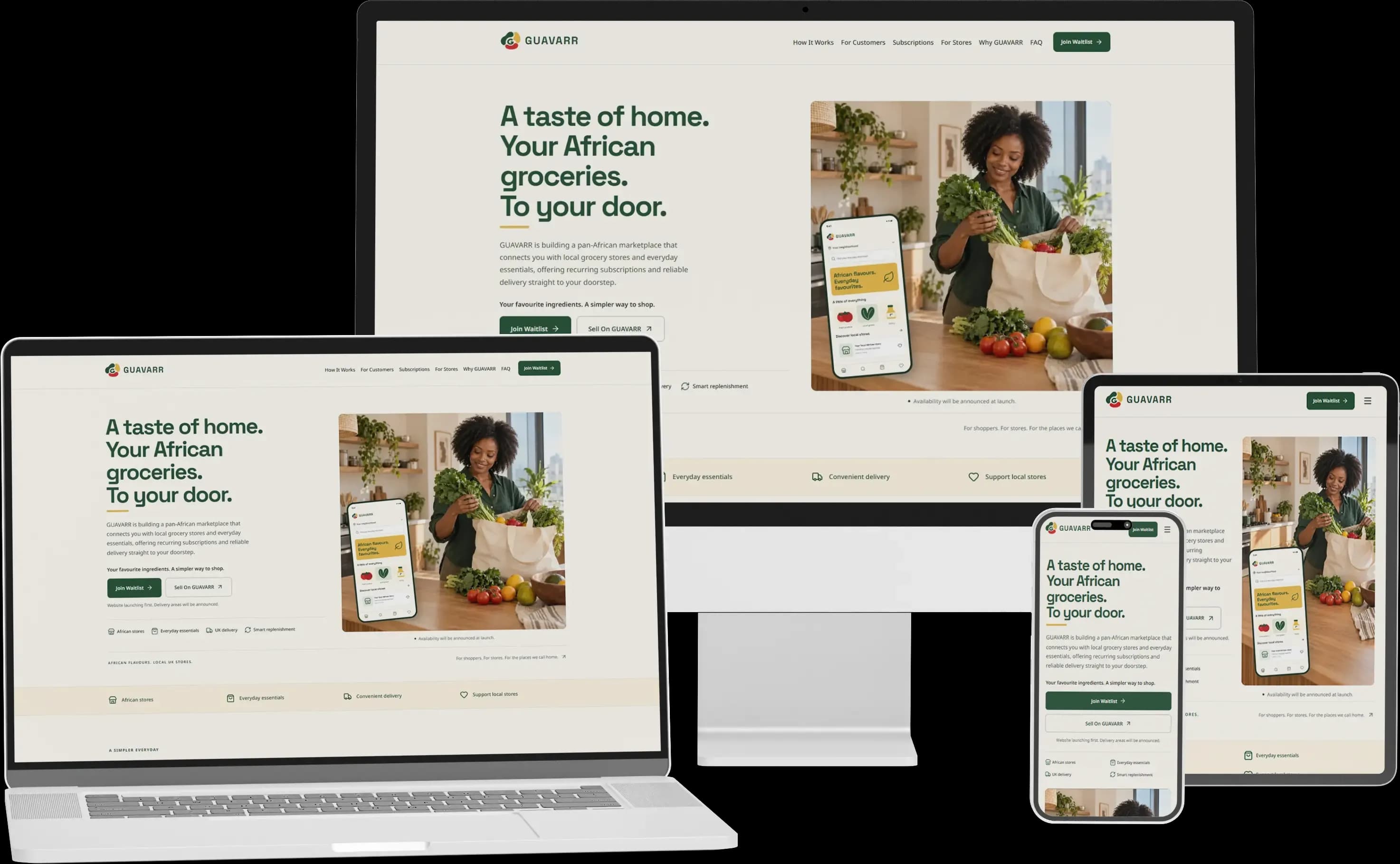 ACTUAL PROJECT · MARKETPLACE / BUSINESS OPERATIONS
MARKETPLACE OPERATIONS
GUAVARR connects grocery shopping with vendor tools, subscriptions, delivery workflows and dashboards.
It shows how a customer-facing experience and the operational tools behind it can be designed as part of one product.
View GUAVARR case study (opens in a new tab)03A CLEAR ROUTE FORWARD
Understand the people, data, exceptions and dependencies before deciding what to build.
Agree the scope, prototype the core journeys and set acceptance criteria with your team.
Develop the system, test integrations and rehearse any data migration using agreed checks.
Plan training, launch and a fallback approach. Agree ongoing support and the next improvements.
04BEFORE WE GET STARTED
Have a question specific to your project? Let’s talk it through.
Tell us about your projectIt can be a good fit when a distinctive workflow, integration requirement or operational constraint is difficult to support with existing products. If configuring an established tool solves the problem, that may be the more practical starting point.
Cost depends on the workflows, users, integrations, data migration and design work involved. Once we understand the requirements, we recommend a practical delivery approach and provide an estimate. A focused first release can help prioritise the work without committing to every future feature.
We can explore a phased rollout, integrations with the current system and staged data migration. The approach depends on available access, data quality and how much operational disruption your team can accommodate.
Where the systems provide suitable APIs or supported data access, we can assess integration options. We review authentication, vendor restrictions, data mapping and error handling before committing to an approach.
Ownership, source-code access, third-party licences and support responsibilities should be defined in the project agreement. We can discuss maintenance, hosting and continued development as part of the proposal.
05YOUR NEXT STEP
Start with the process that slows your team down. We’ll help define a practical first phase.